ITFRESEN Track order Free DHL shipping over €450
— Sub-category

Arabic Oud

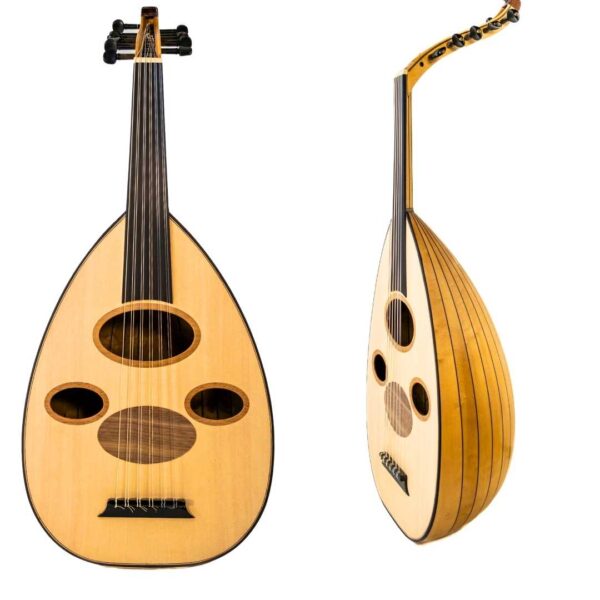
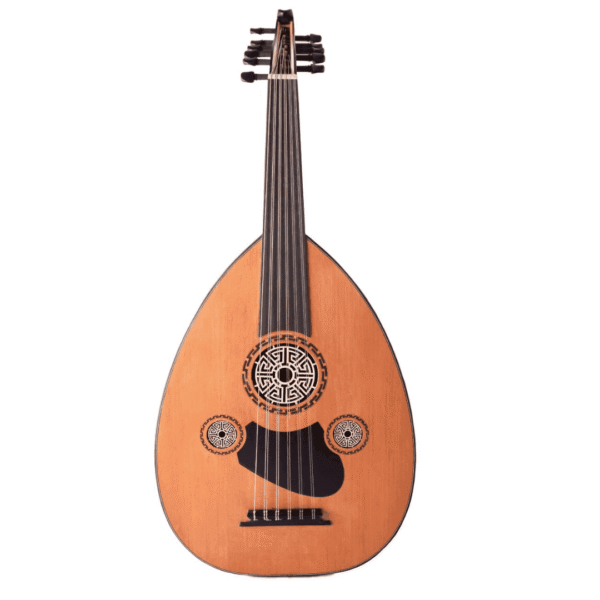
The Arabic oud is an eleven-string fretless lute at the heart of Arab classical music, raqs sharqi, and contemporary Middle Eastern ensemble work. Compared to its Turkish counterpart, the Arabic oud has a larger body and deeper bowl, producing a warmer, fuller voice with stronger bass presence — well suited to traditional Arabic maqam repertoire, ensemble accompaniment, and solo improvisation in the muwashshah and longa traditions.

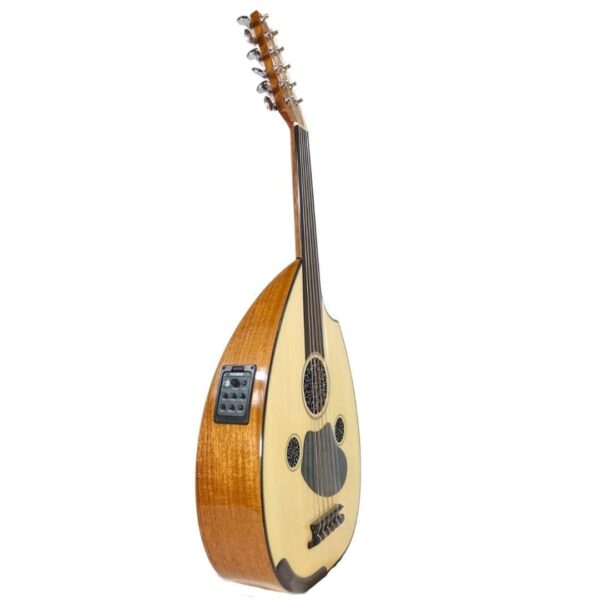
Most Arabic ouds use a spruce or cedar soundboard paired with rosewood, walnut, or sometimes mahogany back and sides. Strings are typically arranged as five double courses plus a single bass string — eleven strings total — made of nylon or gut and tuned in fourths. The fretless fingerboard supports the quarter-tones and microtonal slides that define Arab classical music, essential for Egyptian, Syrian, Lebanese, and Iraqi maqam practice.

The Arabic oud is played with a risha (plectrum) to pluck strings and create rhythmic patterns, alongside fingerpicking for melodic phrasing and ornamentation. Solo improvisation (taqsim) showcases the instrument’s full tonal range, while ensemble work centers on accompanying vocal traditions and instrumental suites such as the wasla. The deeper bass voice gives the Arabic oud presence in larger Arabic music ensembles, where it often anchors the rhythmic and harmonic foundation.

At Tapadum, our Arabic oud collection brings together instruments from independent master luthiers working in Turkey and across the region. Pieces from Mustafa Gezerdag (maple-bodied Arabic ouds), Ahmet Topan of Alto Oud (semi-hollow construction), Yildirim Palabiyik (signature concert instruments), and Feramis Aktas (professional electric ouds) each carry distinct voicing, materials, and bracing decisions. Every instrument passes individual quality control — tuning stability, soundboard response, action, and string spacing — overseen by our string instruments specialist Sertan Sarioglu at our Izmir workshop before leaving for our Brisighella, Italy showroom.

For Turkish maqam practice or brighter tonal character, see our Turkish Oud collection; for stage use with amplification, our Electric Oud range; for broader context across both traditions, see the Oud category overview. Free Shipping & 15-day return apply across the EU.

Frequently Asked Questions

What's the difference between an Arabic oud and a Turkish oud?
The Arabic oud has a larger body, deeper bowl, and warmer bass voice — designed for Arab classical music, ensemble accompaniment, and Egyptian and Levantine maqam traditions. The Turkish oud has a smaller body, shorter neck, and brighter, more focused tone — built for the microtonal precision of Turkish maqam music and solo improvisation. Both share the same fretless construction and tuning in courses, but their timbres, tonal character, and repertoire focus differ significantly.
How is the Arabic oud tuned?
The Arabic oud uses eleven strings arranged as five double courses plus a single bass string, tuned in fourths. The most common Arab tuning from low to high is C–F–A–D–G–C, with the single bass string typically tuned to C or F below the lowest course. Variants exist for Egyptian, Syrian, and Iraqi traditions. The fretless fingerboard supports quarter-tones and microtonal slides essential to maqam practice.
Where do I start with an Arabic oud?
For students beginning Arab classical practice, look for an instrument with stable tuning, comfortable action, and balanced string spacing. Traditional cedar-top Iraqi builds offer a warm, fuller voice well suited to maqam study, while maple-bodied Arabic ouds from luthiers such as Mustafa Gezerdag give a slightly brighter response with strong projection. Inventory shifts as luthiers complete new builds — restocked periodically — so available models vary. Every instrument in our collection passes individual quality control before shipping, so even entry-level pieces are concert-capable.
What strings does an Arabic oud have?
The Arabic oud has eleven strings arranged as five double courses (paired strings tuned in unison) plus a single bass string. Strings are made of nylon or gut, with the bass typically wound. Each course produces a stronger, fuller tone than a single string, giving the oud its characteristic depth. The fretless fingerboard means you can slide between notes freely — essential for the quarter-tones and microtonal ornamentation of Arab classical music.
Where can I find authentic Arabic ouds for sale?
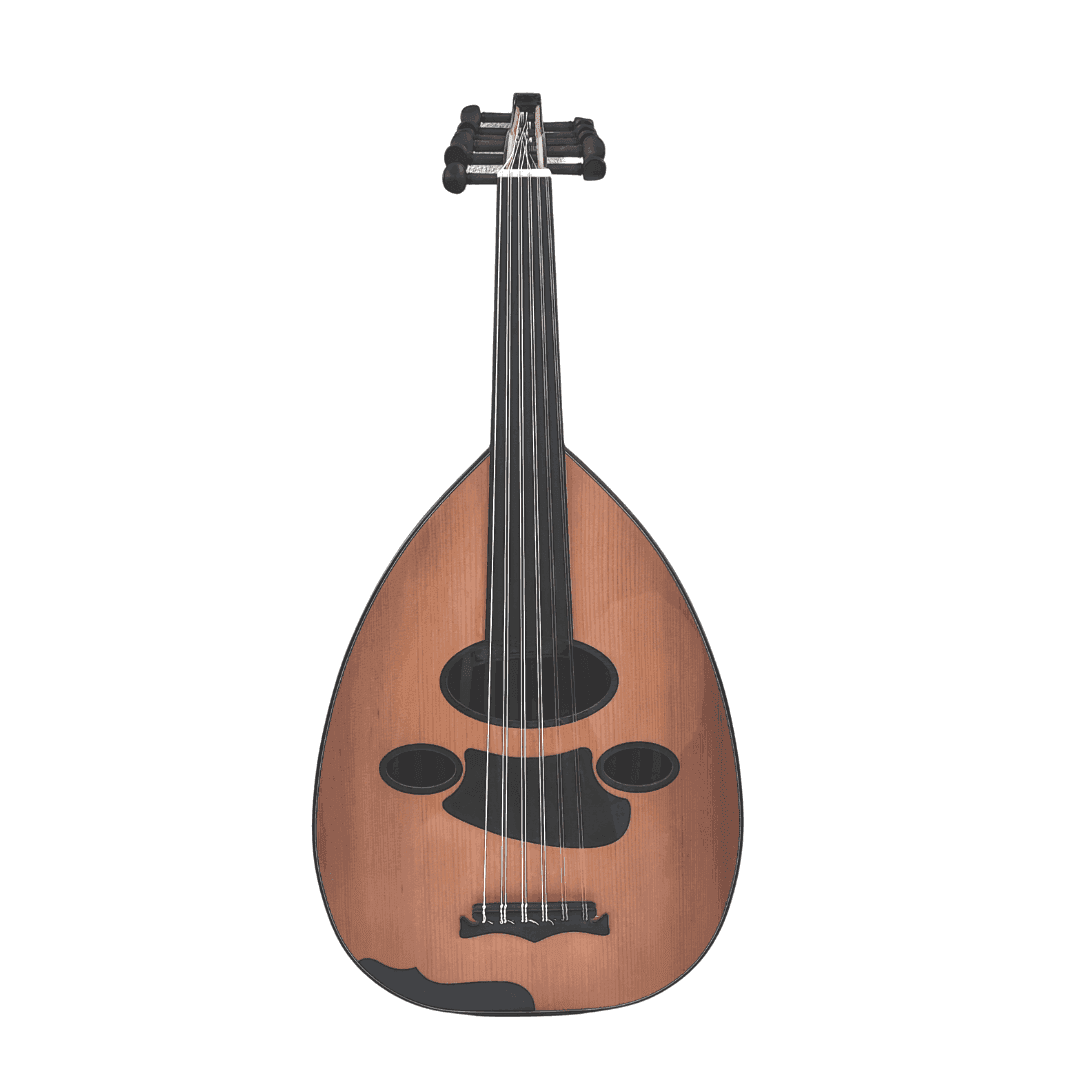
Authentic Arabic ouds are available at Tapadum — our collection brings together hand-built instruments from independent master luthiers across the region. Current inventory typically includes traditional cedar-top Iraqi builds, maple-bodied ouds by Mustafa Gezerdag, semi-hollow Arabic electric ouds from Ahmet Topan of Alto Oud, professional electric ouds by Feramis Aktas, and signature concert instruments from Yildirim Palabiyik. Stock is restocked periodically as luthiers complete new builds. Every instrument passes individual quality control at our Izmir workshop before joining our Brisighella, Italy showroom, with EU-wide shipping and 15-day return.
Arabic Oud
This site is registered on wpml.org as a development site. Switch to a production site key to remove this banner.