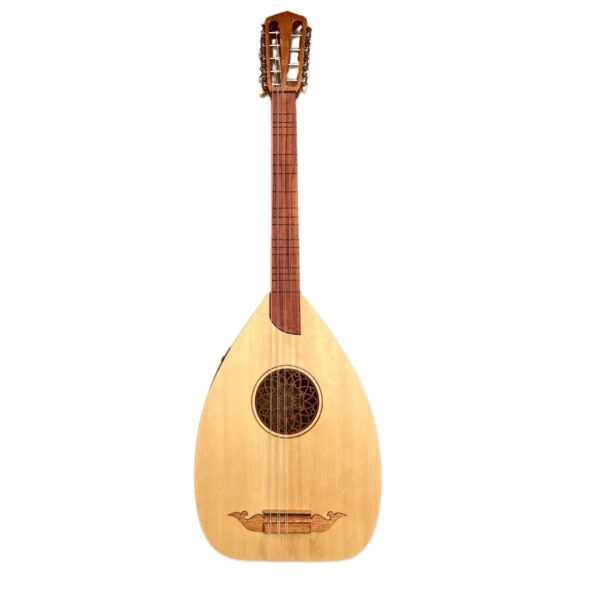
Lavta
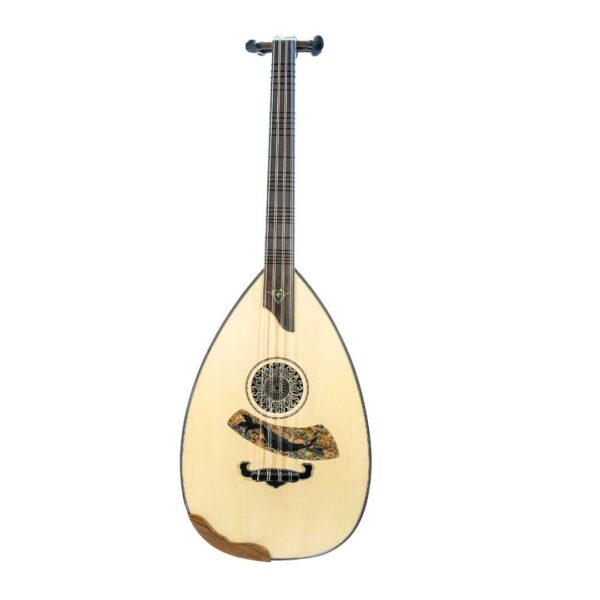
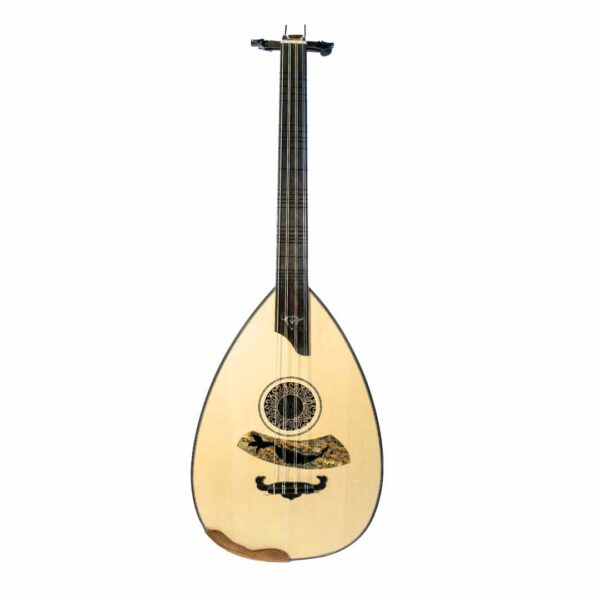
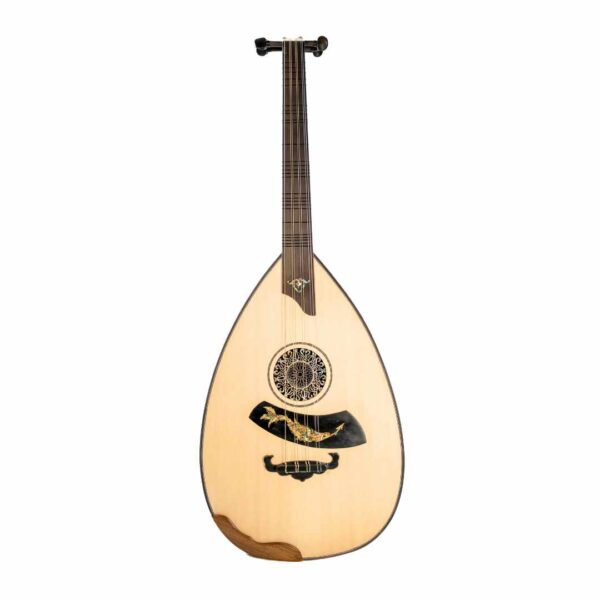
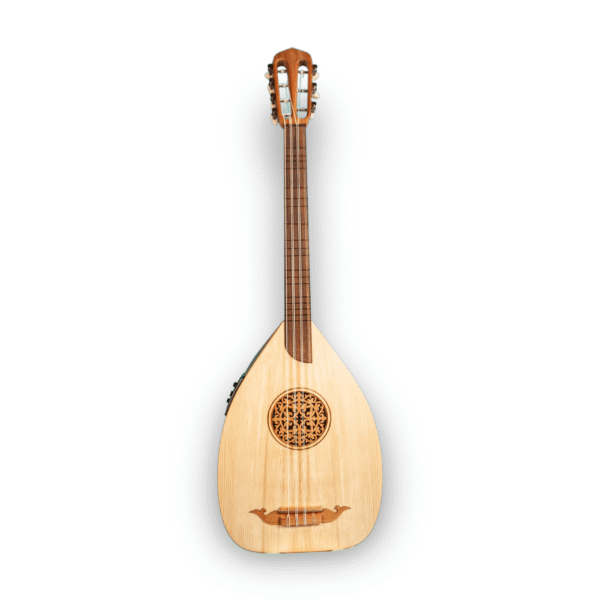
The Turkish lavta is a fretted plectrum lute with a graceful pear-shaped body and a long, slender neck — a Mediterranean lute family member that sits between the Arabic oud and the Anatolian saz tradition. It carries Ottoman classical heritage rooted in Persian and Arabic lute practice, declined during the nineteenth century, and was returned to active concert life by contemporary players who recognized its melodic precision and chamber-ensemble compatibility.
Construction follows classical Mediterranean lute geometry. The carved or staved pear-shaped bowl is typically built from walnut, mulberry, or maple, paired with an aged spruce or cedar soundboard for warmth and projection. The fingerboard carries movable gut or nylon frets — distinct from the fretless oud — allowing microtonal adjustment for makam practice while supporting precise intonation across rapid passages.
Most lavtas carry four to five courses of strings tuned in fourths, played with a plectrum for melodic clarity and chord articulation. The fretted neck supports the makam quarter-tones and microtonal slides essential to Ottoman classical and Turkish folk repertoire, with the right-hand plectrum technique driving both ornamentation and fast-passage definition.
The lavta sits at the heart of fasıl ensemble work, taksim improvisation, and modern crossover projects bridging early music with Turkish classical traditions. Players who already work with the oud often add the lavta for the melodic precision that a fretted neck provides within the same broader string instruments family.
At Tapadum, Mustafa Gezerdag and Sertan Sarioglu build lavtas in distinct traditions — Gezerdag in Izmir workshop production with attention to Mediterranean lute geometry, Sertan in the Ottoman classical chamber lineage. Each instrument passes individual quality control with our string instruments specialist Sertan Sarioglu before shipping from our Brisighella, Italy showroom.
Frequently Asked Questions
What is a Turkish lavta?
How is the lavta different from the oud?
What music styles use the Turkish lavta?
What materials are used to build a quality lavta?