Clay Darbuka
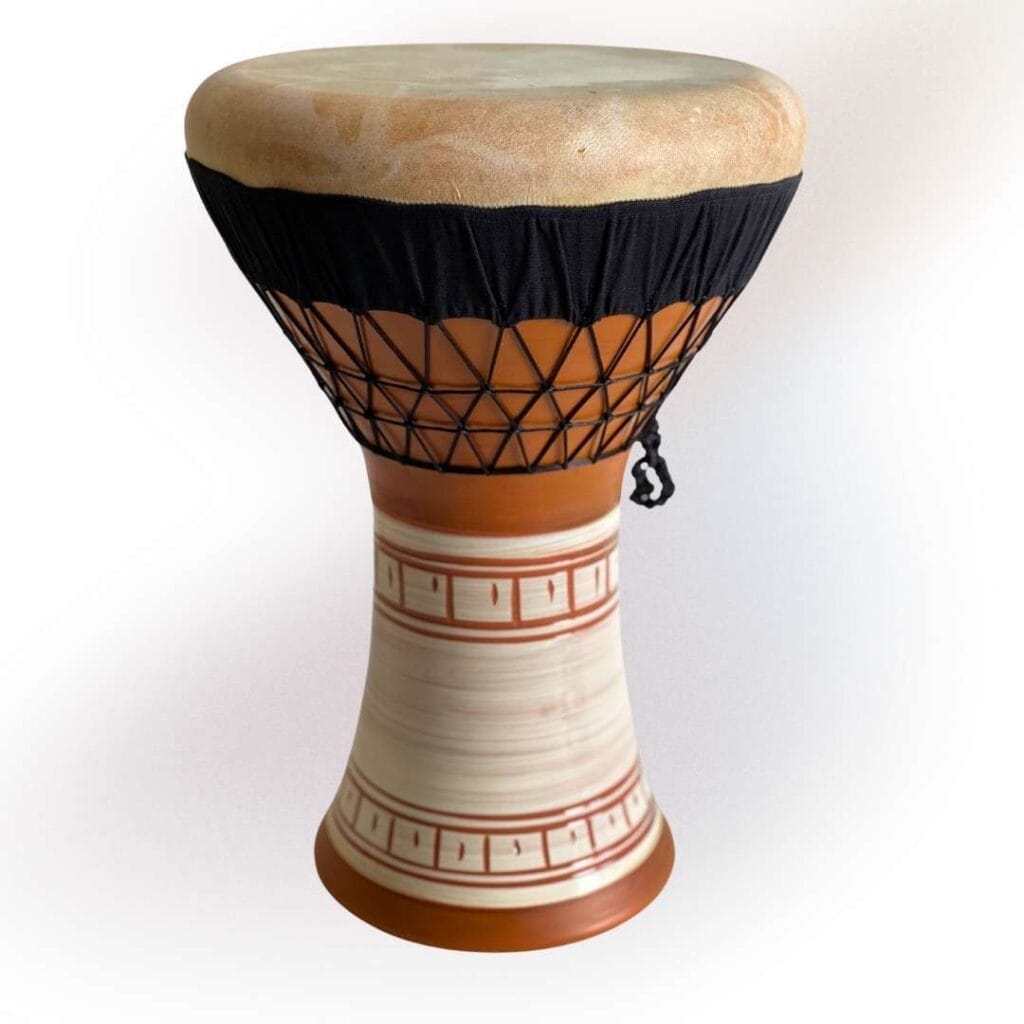
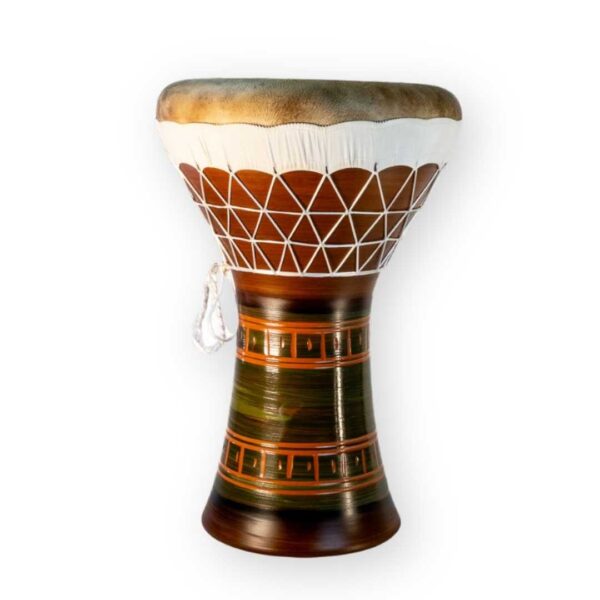
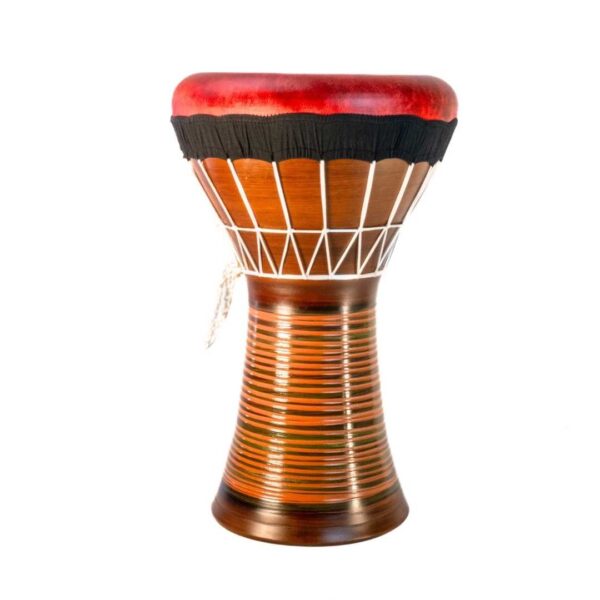
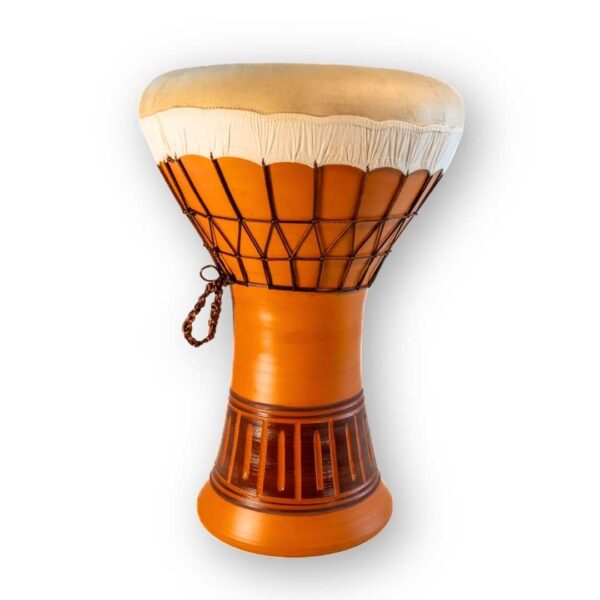
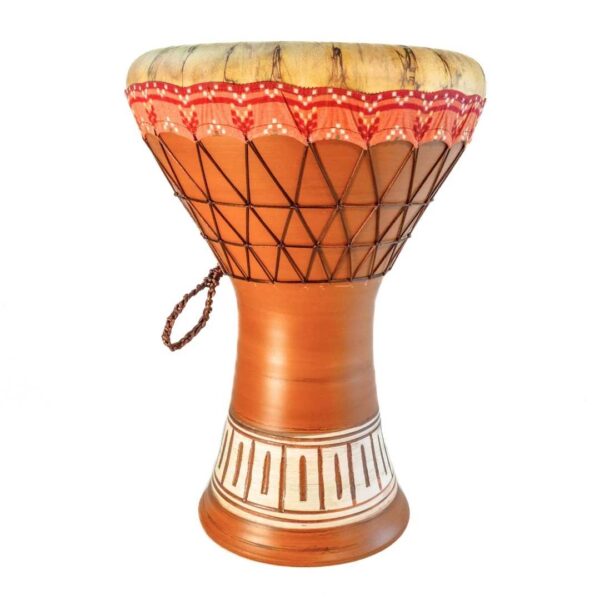
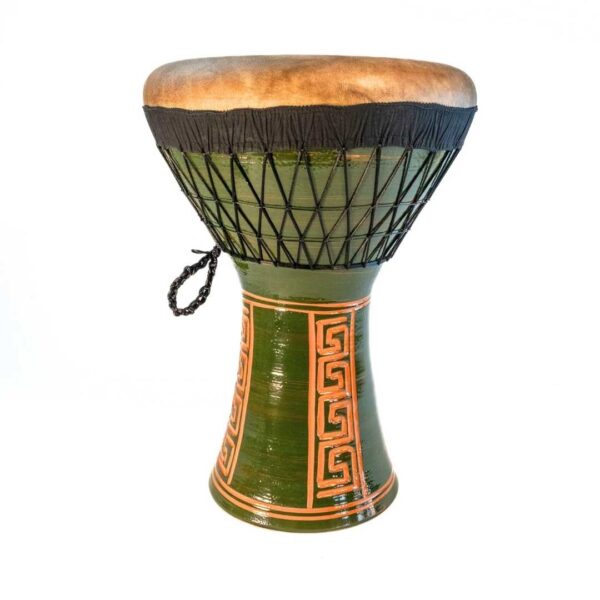
Clay darbuka is a traditional hand drum with a clay body and natural skin head, central to Egyptian, Middle Eastern, and North African percussion. The instrument shapes the rhythmic foundation of Arabic classical music, raqs sharqi, and contemporary world music ensembles. Solo performers value its bright, focused tone; ensemble players use its bass variants for low-end pulse. Tapadum’s Clay Darbuka collection covers the three traditional size families — Solo, Sumbati (mid-bass), and Dohola (bass) — each tuned for a specific role in the rhythm section.
Construction and Head Materials
Each instrument is hand-shaped from clay and fired, with the body finished to highlight the natural surface texture. Decorative work follows Egyptian tradition: mother-of-pearl inlay on premium models, hand-painted motifs on others. The drumhead uses natural goatskin or synthetic membrane — goatskin gives warmer harmonic content with stronger overtone presence, while synthetic offers humidity-stable tone for stage and outdoor use.
Integrated Tuning Light System
Every Tapadum Clay Darbuka includes our signature Tuning Light System — an internal heat-based tuning mechanism. A traditional incandescent lamp mounted inside the body gently warms the drumhead, expanding the natural skin until you reach the desired tension and pitch. An adjustable dimmer gives precise control over temperature, letting you set and hold a stable tuning throughout practice and performance.
Egyptian Tradition and Repertoire
Egyptian classical and folk repertoire — saidi, malfuf, masmoudi, and baladi rhythms — sits at the core of clay darbuka practice. The instrument also appears in Turkish, Lebanese, Syrian, and Maghrebi music, and increasingly in world fusion projects where its earthy timbre balances metal and synthetic percussion. Solo improvisation (taqsim) showcases the drum’s full tonal range; ensemble work focuses on the doum-tek strike vocabulary that drives Arabic dance and concert music.
Tapadum Workshop Quality
Each Tapadum clay darbuka is built by a dedicated two-person team at our Izmir, Turkey workshop. The clay shell — the acoustic heart of the instrument — is hand-shaped by Ahmet Tashomcu, a master potter listed in Turkey’s National Inventory of Living Human Treasures and a two-time World Pottery Champion (2017, 2019). Working with iron-oxide-rich red clay native to the Menemen region, Ahmet’s firing technique gives our darbukas their characteristic resonance and durability. The drumhead is then completed by Mehmet Nihat San, whose work covers skin selection and adaptation, head tensioning, rope binding, and final sound testing — every drum that leaves the workshop has passed his ear before it reaches our Brisighella, Italy showroom. Solo models suit solo performers and recording use; Sumbati gives ensemble players a versatile mid-bass voice; Dohola provides the deep foundation for groups working in classical Arabic and Egyptian traditions. Every Clay Darbuka ships complete with the integrated Tuning Light System and a quality gigbag for safe transport and storage.
Hear Our Clay Darbukas in Action
Listen to the warmth and depth our clay darbukas produce. The playlist below collects performance and demonstration videos featuring our Solo, Sumbati, and Dohola models in solo improvisation, ensemble use, and side-by-side comparisons.
▶ Watch the Clay Darbuka playlist on YouTube
Explore Our Darbuka Collection
Browse our Clay Darbuka collection alongside our Pro Aluminum Darbuka and Travel Darbuka selections within the wider Percussions family. The Tapadum support team helps you match darbuka size and head material to your playing style. Free Shipping & 15-day return apply across the EU.
Frequently Asked Questions
What is the difference between Solo, Sumbati, and Dohola sizes?
Goatskin or synthetic head — which should I choose?
How is the head tension adjusted?
Is clay darbuka suitable for outdoor performance?
What should I look for when buying a handcrafted clay darbuka?