
Description
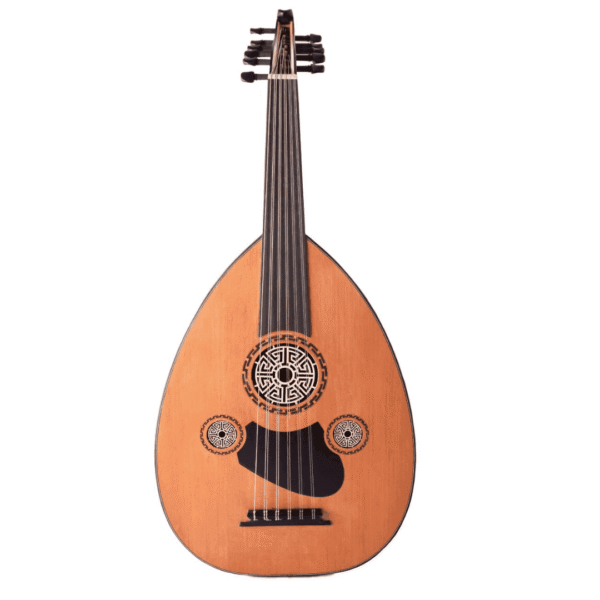
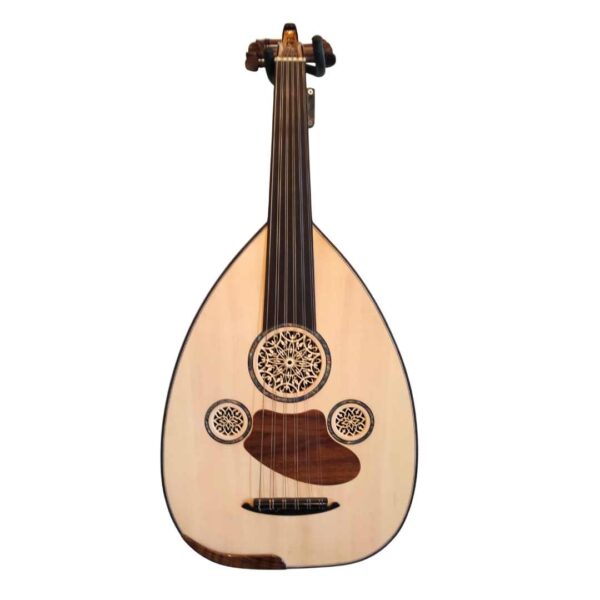
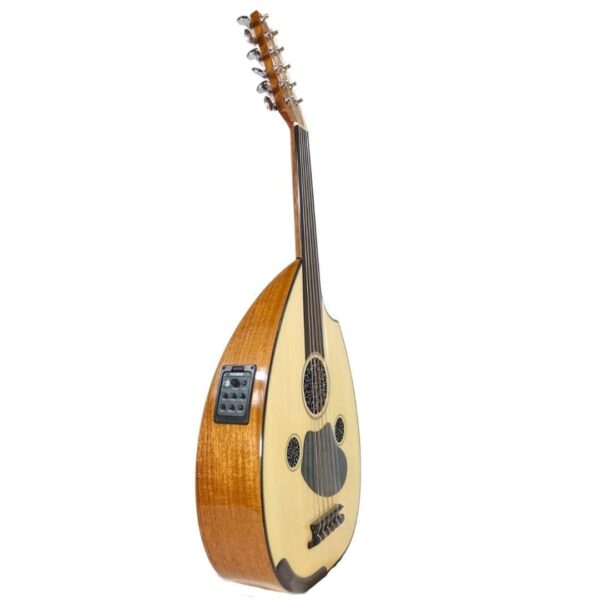
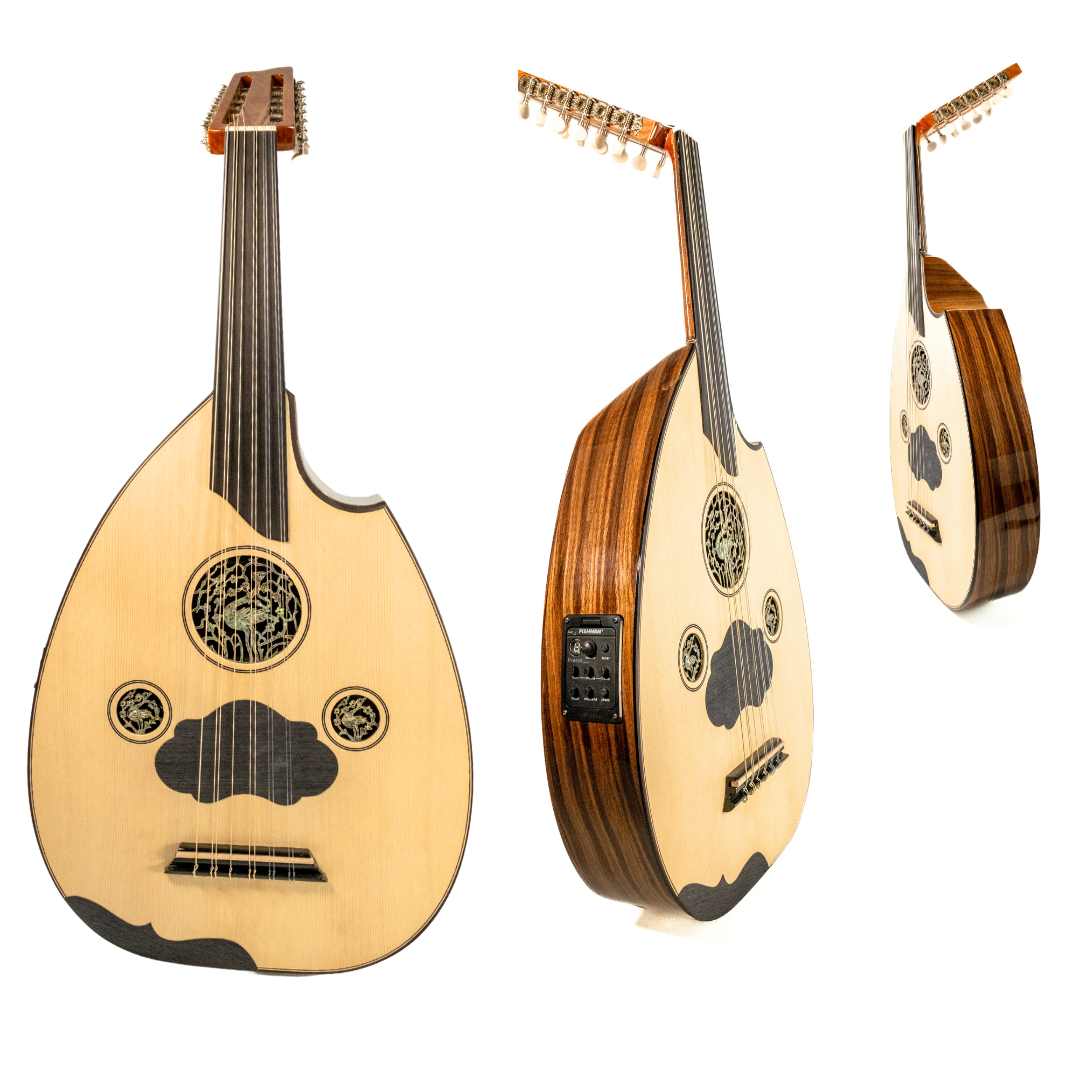
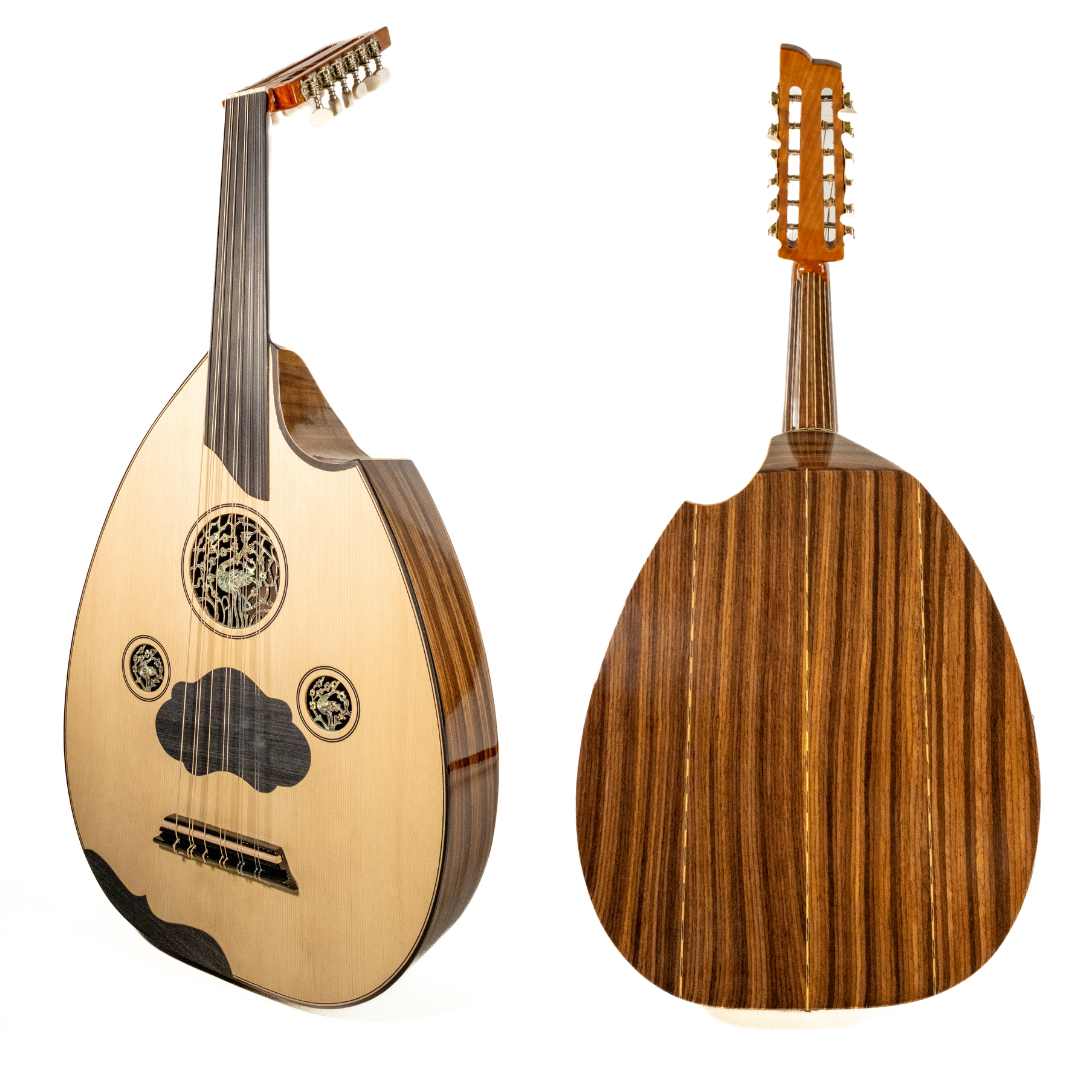
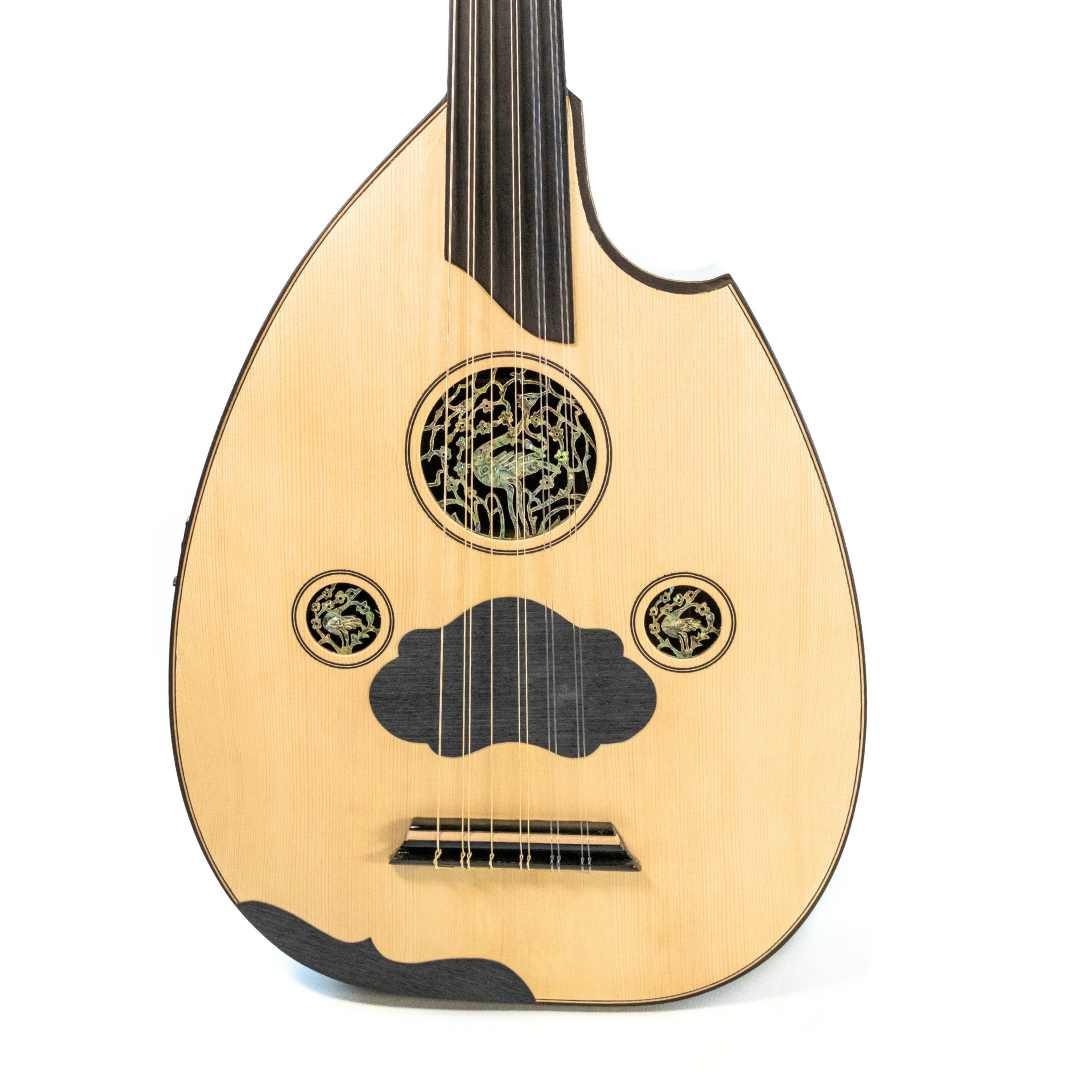
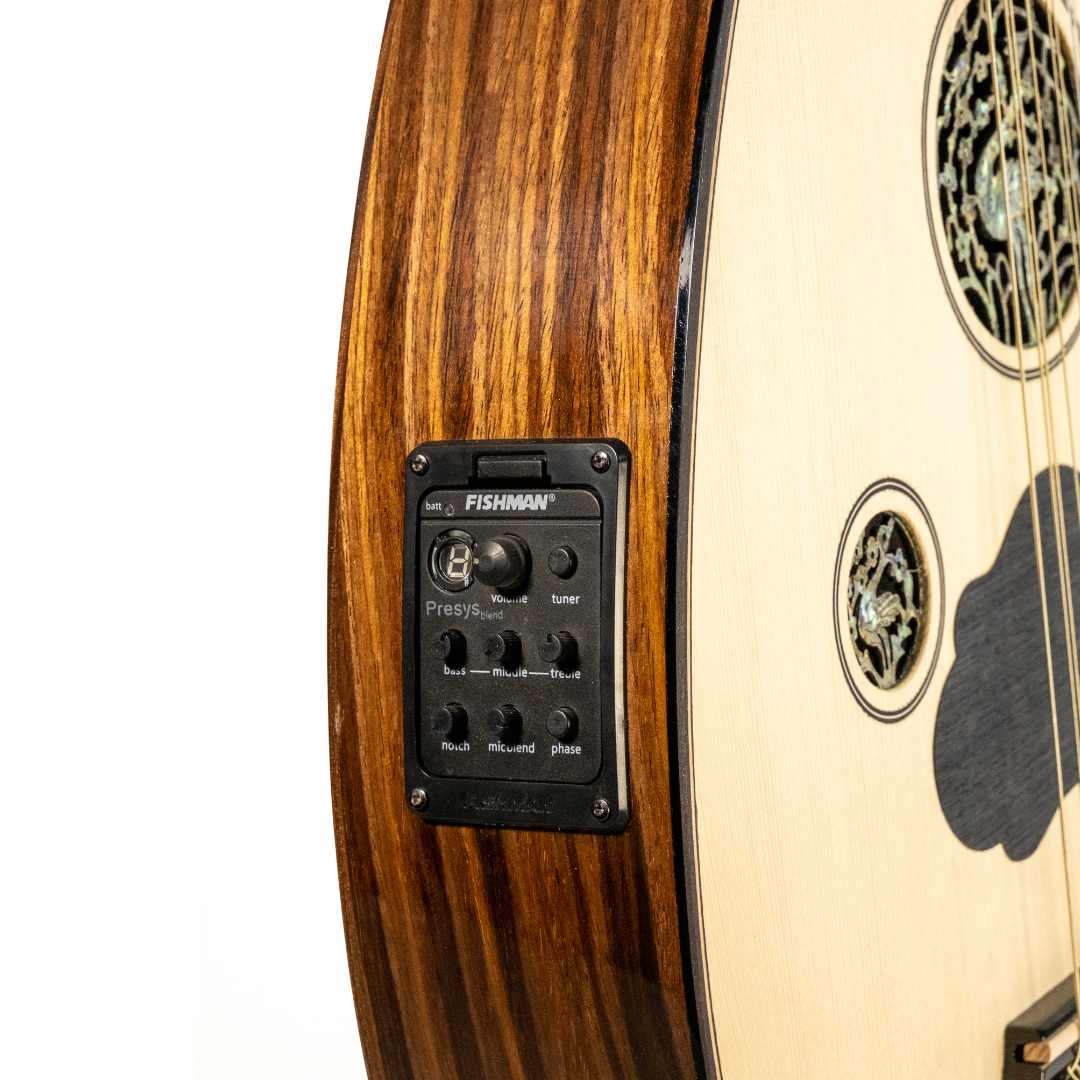
The Electric Turkish Oud from Tapadum is a semi-acoustic instrument built for musicians who need the tonal character of a traditional Turkish oud combined with the practicality of an amplified, low-feedback design. Its smaller, semi-hollow body and integrated magnetic pickup serve players moving between live stages and studio sessions where consistent volume and tone control matter more than maximum acoustic projection.
Semi-Acoustic Construction
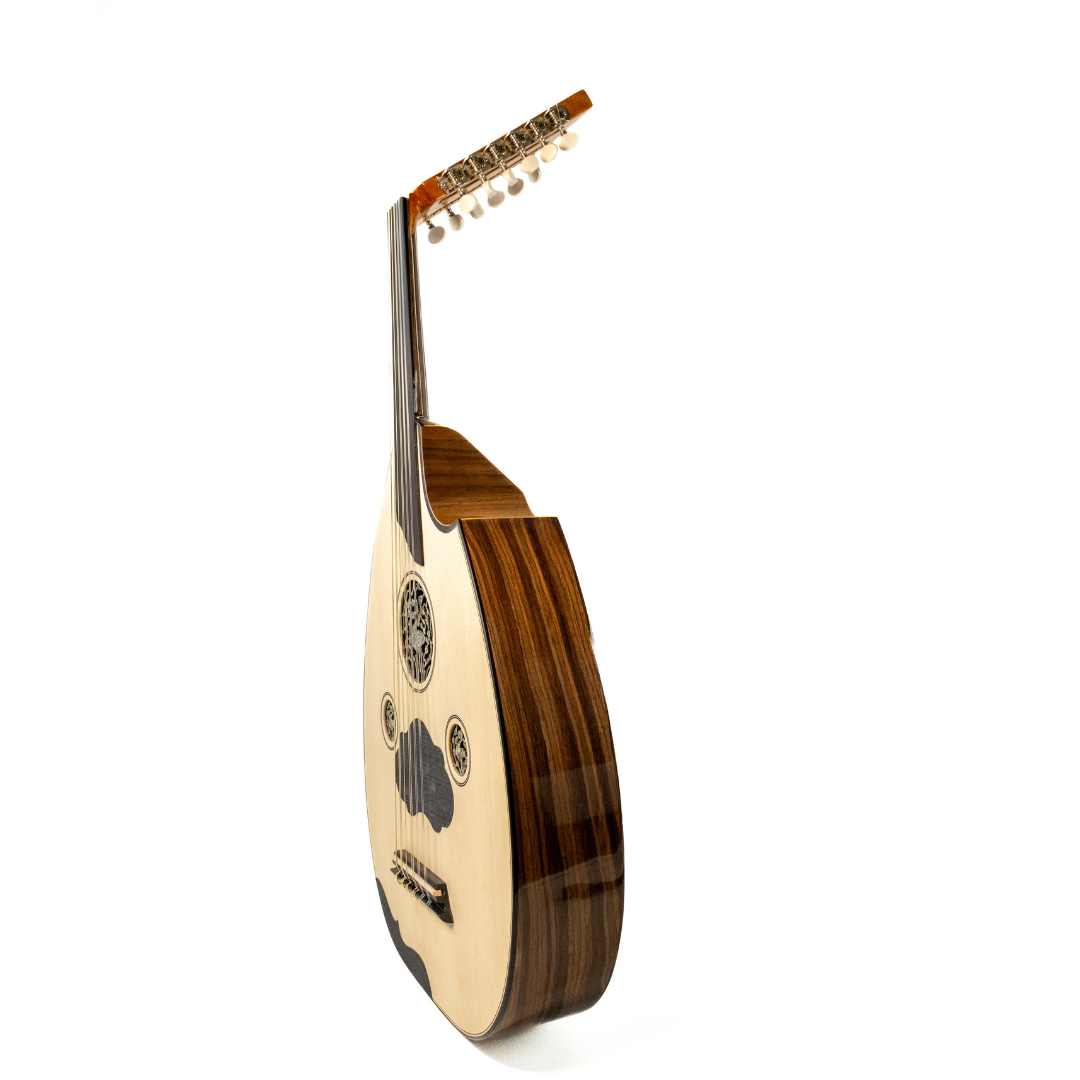
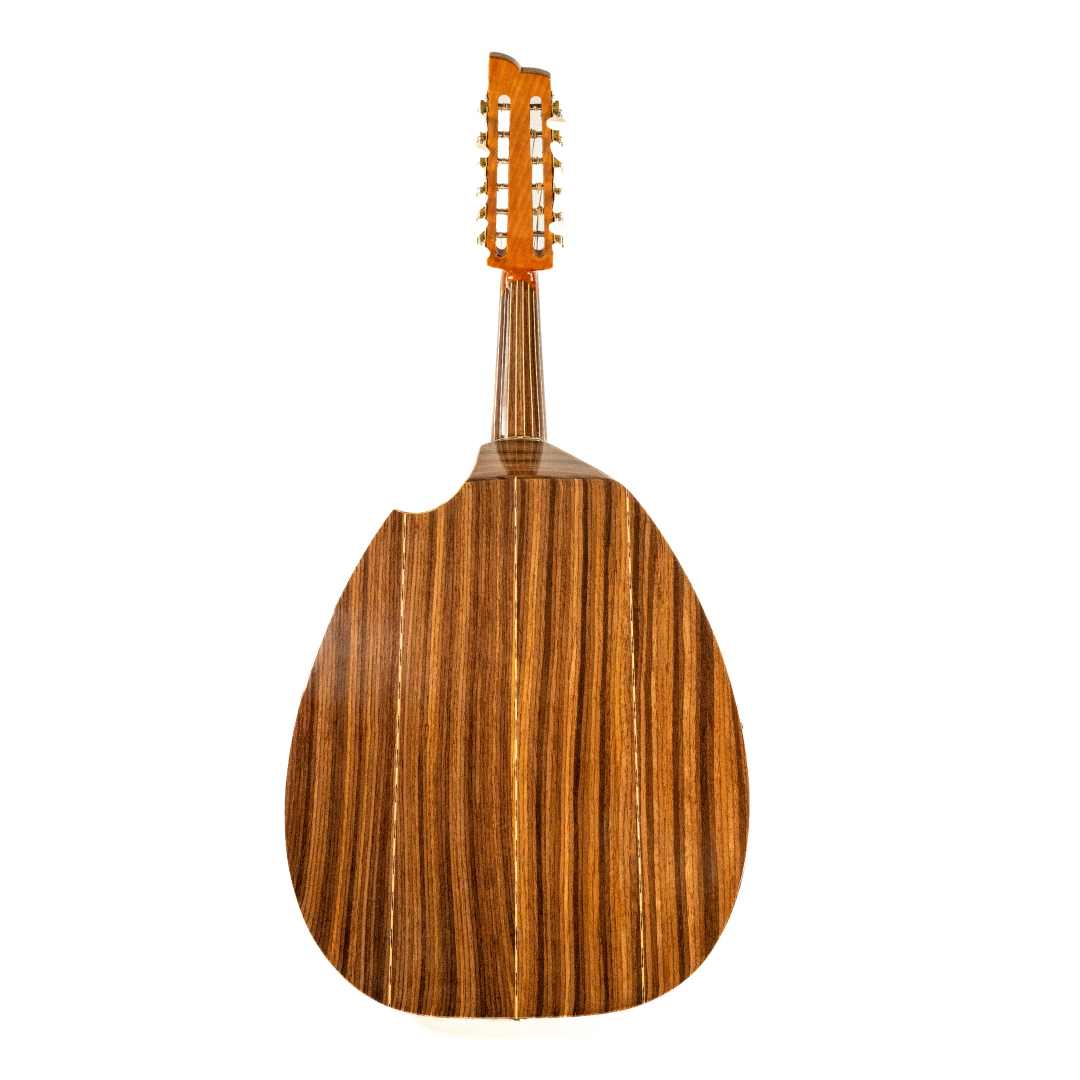
This Electric Turkish Oud is built using a semi-hollow or cutaway design — either by reshaping a traditional oud body to a reduced depth, or by employing a custom slim-body construction. The trimmed dimensions deliver two practical advantages over a fully acoustic oud: reduced acoustic feedback on amplified stages, and improved portability for travel and longer performance sets.
Despite the smaller body, the design preserves an internal resonance chamber. This keeps the oud’s acoustic identity intact when played unplugged — the tone remains focused and articulate, responsive to both fingerstyle and rissha (plectrum) playing.
Magnetic Pickup System
The instrument is equipped with a magnetic pickup coupled with the built-in resonance chamber. This setup gives the player two practical signal paths: an unplugged acoustic voice for practice and intimate playing, and an amplified output that runs cleanly through standard instrument signal chains — guitar amplifiers, acoustic-instrument amps, mixing consoles, audio interfaces, or effect pedals.
The pickup configuration suits players exploring oud in fusion, ambient, jazz, and modern world-music contexts, where direct signal output replaces the need for external microphones and reduces studio setup time.
Specifications
| Type | Semi-Acoustic Electric Turkish Oud |
| Construction | Semi-hollow / cutaway design with internal resonance chamber |
| Pickup | Magnetic, integrated with the resonance chamber |
| Use case | Live performance + studio recording |
Who It’s For
This oud is built for musicians who already understand the Turkish oud’s tonal vocabulary and need a stage-ready or studio-ready instrument. Typical players include live oud performers working in world-music and fusion ensembles, recording musicians who want a direct signal path without microphone bleed, and experimenters using effect pedals to take the oud into ambient, electronic, or jazz contexts.
It is not a first-instrument choice. Playing technique still demands the same fingering and rissha control as a traditional Turkish oud — see our traditional Turkish oud collection for first-instrument options.
Care & Maintenance
Care for this oud as you would any acoustic-electric stringed instrument. Wipe the strings and body with a dry cloth after each session. Keep the instrument in a stable humidity environment of 40–55% when stored. The pickup electronics require minimal upkeep — avoid extreme temperatures and liquids near the output jack. For tuning, consult our Turkish oud tuning guide.